
The growth of fintechs and payment institutions has brought new ways to structure financial operations in Brazil. Among these models, the so-called omnibus account has gained relevance for allowing greater agility and simplification in resource management.
At the same time, this model has begun to raise important discussions about transparency, traceability, and regulatory compliance.
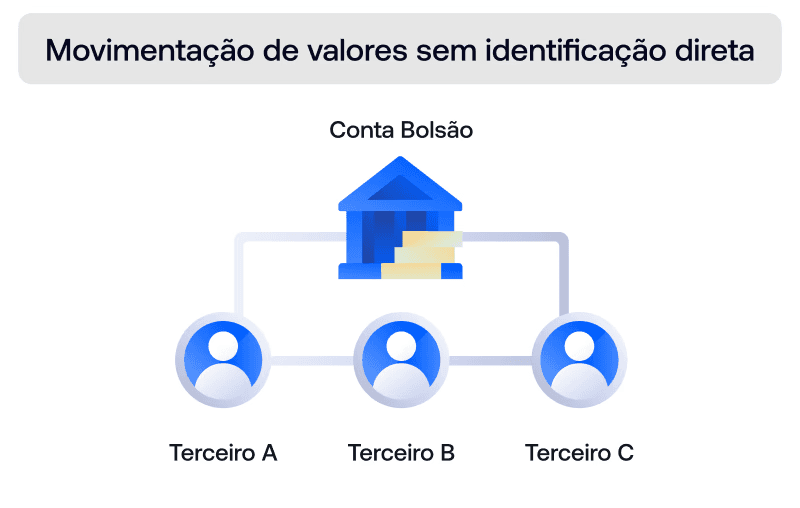
An omnibus account is a model in which the funds of multiple clients are held in a single bank account, usually in the name of the fintech or payment institution, without direct individualization in the financial system.
More than a technical concept, understanding how this model works—and what its risks are—is essential for companies that operate or intend to operate financial services.
What is a pooled account?
A pooled account is a structure in which a financial or payment institution holds the funds of multiple users in a single centralized account.
In practice:
The money from several customers is concentrated in a single account
The formal ownership of that account belongs to the company itself
The separation of amounts occurs only internally
This structure depends on an internal control system (ledger) of the fintech to separate customers' balances, which means that the individualization does not exist at the banking level, only at the system level.
In other words, although the customer has an “individual” balance within the platform, that amount is not linked to its own bank account.
Why does the mechanism exist
The pooled account model emerged as a way to simplify the operations of fintechs and companies that needed to move funds for multiple users.
Among the main reasons for its adoption are:
Reduced operational complexity
Less dependence on traditional banking infrastructure
Faster implementation of financial products
At a time when the market was still taking shape, this model allowed various companies to launch financial solutions with greater agility.
However, this simplification brought with it an important limitation: the lack of individualization in the financial system.
Is a pooled account illegal?
The omnibus account is not, by definition, illegal. However, the central point is not the model itself, but the way it is used.
With regulatory developments in Brazil, especially with increased oversight of payment institutions, a higher level of the following has come to be required:
Identification of the ultimate owner of the funds
Traceability of transactions
Operational transparency
Models that do not offer this clear individualization may be considered inadequate from a regulatory standpoint, especially in scenarios involving fraud risk, money laundering, or difficulty in judicial blocking.
In practice, this means that the omnibus account model has been increasingly pressured, not necessarily prohibited, but progressively replaced by more transparent structures.
The risks associated with the pooled account
The absence of individualization has significant implications for financial operations.
Court-ordered freezes
Since the funds are concentrated in a single account, any court-ordered freezes may affect the total balance, regardless of the source of the funds.
This kind of scenario creates a systemic risk: a single legal action can affect all users of the platform, even those who have no connection to the case.
Risk of money laundering
The lack of granular identification makes it difficult to track financial transactions.
For financial institutions and fintechs, this is not just an operational risk; it is also a regulatory risk that can lead to sanctions and operating restrictions.
Lack of transparency
Without proper segregation, it becomes harder to identify ownership of the funds, which can compromise audits and internal controls.
👉 To better understand how these risks affect companies in practice, also see: Can a pooled account freeze your operations? Understand the real risks
How does it work in practice
In day-to-day operations, the pooled account works based on a logical, not banking, separation.
The company maintains a central account at a financial institution while internally controlling users' balances.
This means that:
The bank sees only one account
The company manages multiple balances internally
Users have access to an “individual balance” within the platform
This difference between what exists in the banking system and what is controlled internally by the fintech is what creates the model’s main vulnerability.
What changes with the new rules
As Banco Central regulations evolve, there is a clear trend toward increasing demands for transparency and traceability.
This implies:
Greater need to identify ultimate beneficial owners
Reduction of centralized structures
Encouragement of individual accounts
This movement indicates a structural shift in the market: it is not just a regulatory adjustment, but a transition to more robust financial infrastructure models.
This scenario has led fintechs and companies to rethink their financial structures.
👉 See also: How fintechs are replacing the use of pooled accounts
Impacts for companies
Companies that use or depend on the pooled account model may face important challenges, such as:
Need to adapt to new regulatory requirements
Review of internal processes
Investment in technological infrastructure
In addition, the continued use of this model may limit the scalability of the operation in the long term.
Best practices for risk mitigation
Given this scenario, some practices can help reduce the risks associated with pooled accounts:
adoption of more robust user identification mechanisms
improvement of internal controls
increased transparency in operations
evaluation of alternative models
What is replacing the pooled account
As the market evolves, the main alternative to the pooled account model becomes the creation of individualized accounts, with greater transparency and traceability.
This type of structure requires a technological infrastructure capable of creating and managing accounts at scale, with balance control, transaction management, and integration with the financial system.
👉 Learn more: What are the alternatives to a pooled account (and how to choose the best structure)
👉 And also:How the infrastructure behind digital accounts works
It is at this point that Banking as a Service (BaaS) solutions allow companies to operate with individual accounts, while maintaining operational efficiency and regulatory compliance.
Final considerations
The omnibus account played an important role in the development of the digital financial ecosystem, especially at a time of lower regulatory and technological maturity.
However, with the evolution of the market and regulatory requirements, this model has been progressively replaced by more transparent and secure structures.
Companies operating in this sector need to keep up with this transformation and continuously assess the adequacy of their operations.
Modernize your financial infrastructure
If your company operates or plans to operate financial services, understanding the role of the pooled account is just the first step.
The next is to structure an operation that is secure, scalable, and aligned with regulation
Azify offers a complete Banking as a Service infrastructure for companies that want to build financial products with individual accounts, APIs, and integrated compliance.
Talk to a specialist and see how to evolve your operation beyond the pooled account.