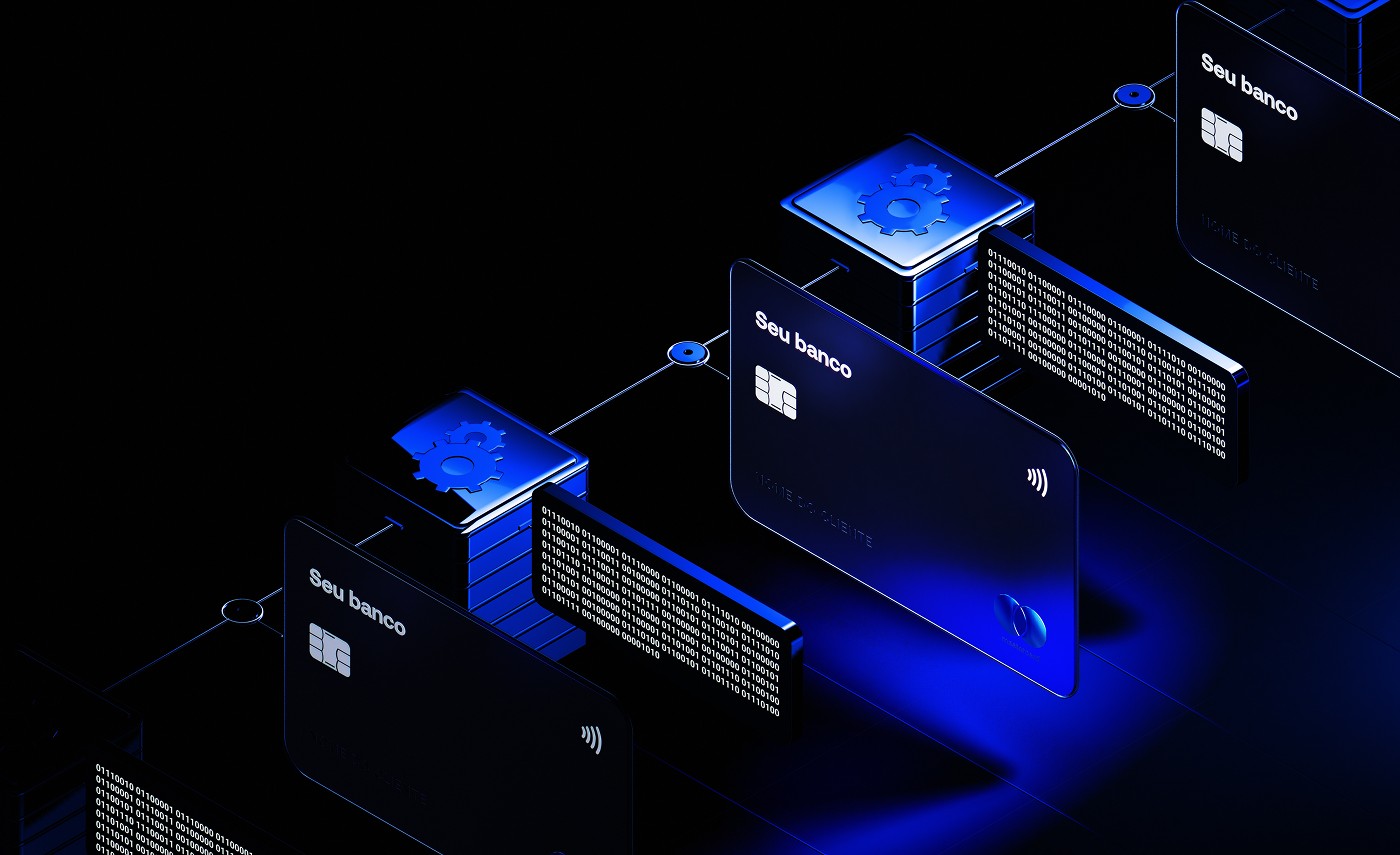
The financial ecosystem continues to transform at an accelerated pace, and companies from various sectors are seeking ways to offer payment solutions that are flexible, secure, and integrable.
In this context, APIs for card issuance and management have become one of the central elements for fintechs, marketplaces, digital banks, and retailers to expand their financial products without building the entire infrastructure on their own.
Azify provides the technological foundation that connects issuance, control, blocking, statement, and monitoring of cards, with operation and compliance incorporated from the architecture. Thus, companies can structure their programs while preserving security, scalability, and regulatory alignment.
Keep going to learn more!
What are card issuance APIs?
The card APIs are interfaces that allow companies to integrate their systems with issuance, processing, anti-fraud, and regulatory governance platforms.
Through these APIs, it is possible to:
create virtual or physical cards;
set limits and usage rules;
track transactions in real-time;
block, unblock, and cancel cards;
perform reissuances;
manage alerts, profiles, and notifications;
access audit trails and operational reports.
All the complexity of the operation, with validations, security, communication with card networks, and regulatory rules, happens in an automated manner integrated into the experience of the contracting company.
How do APIs connect banks, processors, and fintechs?
The expansion of Banking as a Service (BaaS) has allowed banks, card brands, processors, and fintechs to operate in a coordinated manner via APIs. Before this model, only institutions with large structures could issue and manage cards.
With APIs, the flow becomes standardized:
the company requests the creation of a card via API;
the processor validates data and executes the operation;
the API synchronizes balance, profile, and security information;
the back office manages limits, regulatory rules, and journey events;
transactions undergo anti-fraud validation and compliance controls.
This model reduces friction, expands possibilities for personalization, and accelerates integrations with other financial products.
What are the main features of card APIs?
The card infrastructure is usually organized into modules. therefore, it’s time for you to get to know the most common functionalities! Check it out below.
Issuance and Tokenization
The journey starts with the creation of the card itself. With the right APIs, it is possible to issue virtual versions in a matter of seconds or request physical production with complete control over every detail: cardholder name, brand, contactless settings, inclusion in digital wallets, and linking to prepaid or credit accounts.
All this in an integrated and secure manner, ensuring that the card is ready for use!
Rules, Limits and Profiles
Another essential point is the configuration of the card's behavior. Here come the adjustments of daily and monthly limits, definition of spending categories, enabling withdrawals, debit, credit, and even installment plans.
It is also possible to apply specific rules, such as cashback or differentiated conditions for certain audiences, creating tailor-made experiences for each customer profile.
Real-Time Locking and Unlocking
Security also takes center stage. The APIs allow for instantly blocking and reactivating cards, whether due to suspected fraud, loss, theft, scheduled replacement, or during travel. This agility reduces risks and increases user confidence, giving them total control over their own card.
Monitoring and Statement
In day-to-day life, keeping track of transactions is very important. The monitoring modules provide real-time visibility of transactions, automatic categorization of spending, sending personalized alerts, and quick identification of suspicious attempts. This brings more transparency to the customer and more predictability for the business.
Cancellation and Reissuance
When it is necessary to replace a card, the entire process can be automated: cancellation due to loss, theft, expiration, or scheduled exchange, followed by reissuance, dispatch, and activation. The APIs coordinate these steps in a standardized way, maintaining an efficient experience for the user and simplicity for the operation.
Compliance and Audit Trails
Finally, modern APIs also incorporate regulatory requirements. They offer modules dedicated to compliance, data validation, transactional monitoring, and the generation of detailed reports.
This facilitates audits and ensures adherence to regulations from the Central Bank, LGPD, and security frameworks like PCI-DSS. In other words: the necessary foundation to scale without compromising security or governance.
What are the best practices for risk integration and management?
The convenience promised by card APIs comes with responsibility. The development and business teams need to follow recommendations that make the entire flow safe, reliable, and sustainable.
Among the recommended points are:
use encryption to protect sensitive information during transmission;
implement strong authentication and granular authorization by endpoint;
monitor requests, volume, and access patterns;
automate alerts, blocks, and analyses when risk events are identified;
periodically review documentation, logs, and security policies;
conduct continuous testing, covering different use scenarios and user profiles.
Experts remind us that card solutions must comply with requirements such as LGPD, PCI-DSS, and Central Bank regulations. Therefore, choosing a provider with compliance by design tends to reduce operational and regulatory risks throughout the journey.
How does Azify support integrations with card APIs?
Azify provides plug-in APIs that encompass issuance, management, blocking, statements, auditing, and support. The infrastructure has been designed for companies to launch and operate cards with built-in governance, security, and regulatory compliance.
Among the offered features:
Integrable APIs for issuance, management, blocking, and monitoring;
embedded compliance and audit trails;
complete back-office for KPI and risk analysis;
visual customization and flexible rules;
integration with other financial products within the ecosystem;
dedicated technical support throughout the entire cycle.
In the end, a solid integration with card management APIs accelerates the “time to market,” reduces risks, and elevates the business to a new level of delivery for the client. Banking as a Service is at the center of this trend!
Disclaimer: Informational content. Does not constitute an offer of securities, exchange services, or payment. Past performance does not guarantee future results. Azify operates directly or through duly authorized partners, according to the scope.
Frequently asked questions
What is a credit card API?
A credit card API allows companies to issue, monitor, and control cards through digital integrations without needing to create all the banking infrastructure internally. It acts as a bridge between the companies' systems and processors, automating everything from creation to blocking and tracking the card.
How does card issuance via API work?
Issuance via API occurs when a company’s system makes a digital call to the issuer's database, providing customer data, desired card type, and security parameters. The card can be issued virtually in minutes or, if physical, be sent for printing and delivery, always with automation of rules, compliance, and real-time monitoring.
What are the best APIs for cards?
The best APIs for card management and issuance are those that offer robustness, clear documentation, embedded compliance, close technical support, and the freedom to customize rules, limits, and notifications. Solutions like those offered by Azify are recognized for their stability, flexibility, and alignment with market regulations.
How much does it cost to integrate a card API?
The integration cost can vary depending on the project's complexity and transaction volume, but many providers operate with scalable models and fees per API call or per active card. Consulting with the Azify team can provide greater clarity on values and benefits of the integration, as there are offerings for different sizes and needs of companies.
Where to find a good card API?
Companies looking to simplify the offer of cards to their customers can find comprehensive APIs at providers like Azify, which deliver secure, stable tools ready for quick integration with other financial services. Contact can be made directly with Azify's technical support or through the available digital channels for demonstrations.
The modernization of the financial system depends on open technology, intuitive interfaces, and security embedded into each request. The APIs for issuing and managing cards enable companies of any size to access this revolution, from a marketplace wanting to distribute its own card to traditional insurance companies seeking to innovate in customer relationships.
Whether you are a fintech, digital bank, or a company looking to innovate in the financial segment, we can be the right partner for your journey. Talk to the team of experts at Azify, discover our solutions, and advance quickly into the future of digital cards.